
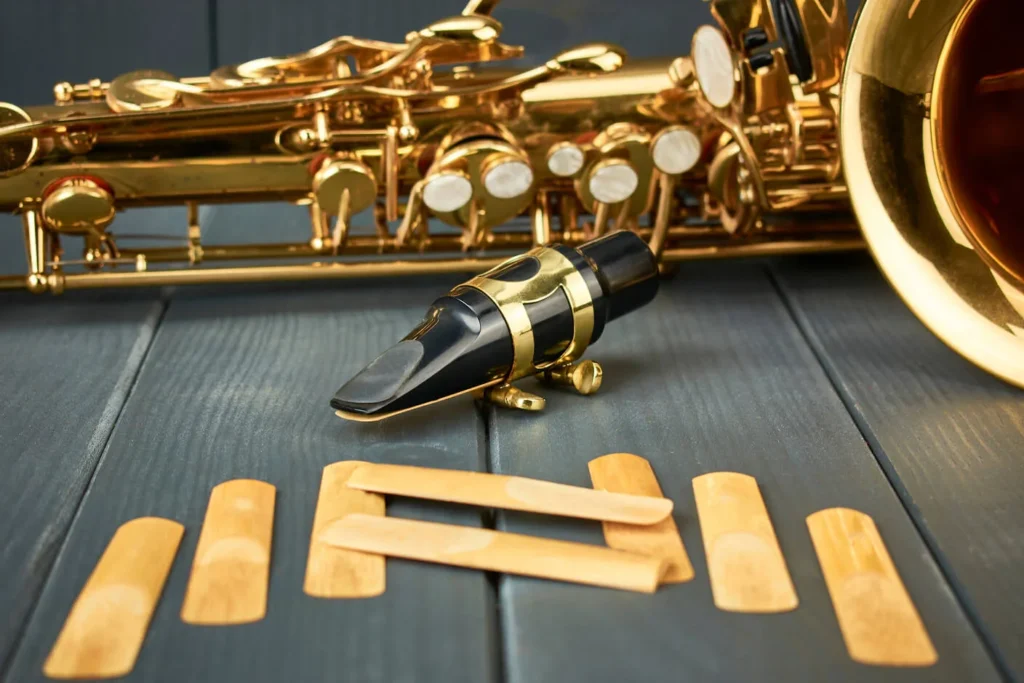
What is a synthetic reed, and could it work for your clarinet or saxophone? A synthetic reed is an engineered alternative to a traditional cane reed. Made from manufactured materials rather than natural cane alone, it vibrates against the mouthpiece to help produce sound. Many players explore synthetic reeds for their consistency, durability, and convenience, especially when changing weather or a busy performance schedule makes cane reeds unpredictable.
Still, the best reed is the one that feels right with your instrument, mouthpiece, and playing style. Understanding the differences can help you decide whether to try synthetic reeds, stay with cane, or keep both in your case.
Synthetic reeds can contain polymers, synthetic fibers, resins, or combinations of materials formed into layered composites. Some products also incorporate natural fibers or cane components. Manufacturers use different designs to achieve the flexibility and stiffness needed for a reed to respond to moving air.
Material alone doesn’t tell you exactly how a reed will play. Its profile, thickness, tip shape, and internal construction also influence resistance and response. Two synthetic reeds can therefore feel quite different, even when their packaging shows the same strength number.
Rather than choosing a reed because it contains a particular fiber or polymer, consider the playing characteristics its manufacturer describes. Then test whether those characteristics translate to your own setup. Consistency is useful, but it doesn’t mean every synthetic design will suit every musician.
One useful distinction is between a reed’s material and its cut. The cut describes how material is distributed along the reed, especially near the tip and heart. That geometry helps explain why reeds with similar ingredients can have different responses. It also explains why changing models may be more noticeable than switching materials alone.
On a clarinet or saxophone, air moving through the mouthpiece causes the reed to vibrate. Those vibrations interact with the instrument’s air column to create musical sound. Synthetic and cane reeds perform this same essential job; the difference lies in how their materials and designs respond under pressure.
A reed’s flexibility influences how readily notes speak, while its stiffness contributes to the resistance you feel. Your mouthpiece facing, tip opening, embouchure, and breath support also shape the result. The ligature keeps the reed positioned against the mouthpiece table, making a secure, appropriate fit part of a reliable setup.
Traditional cane reeds are made from Arundo donax, a natural grass cultivated for woodwind use. Because cane varies in density and structure, two reeds from the same box may not respond identically. Synthetic reeds are engineered for more predictable characteristics, although individual models still differ substantially.
These distinctions provide a starting point, not a verdict. A carefully selected cane reed can be wonderfully consistent for its player, while an unsuitable synthetic reed can feel frustrating despite its durability. A synthetic option can carefully simplify the routine, but it won’t eliminate the need to listen critically and check the setup before a performance.
For many musicians, the biggest advantage is knowing roughly what to expect when they open the case. A replacement synthetic reed of the same model and strength may feel more familiar immediately than a newly selected cane reed. That predictability can be valuable before a rehearsal or performance.
Synthetic reeds also appeal to players who move between instruments. If you’re doubling during a concert, spending less time moistening and checking reeds can make transitions easier. Their reduced sensitivity to humidity may also help during outdoor performances, travel, or rehearsals in changing environments.
Durability is another practical consideration. When a reed lasts longer, you may spend less time testing replacements and more time playing. Just remember that a longer lifespan is a possibility, not a promise, and a damaged tip can end any reed’s usefulness.
Switching materials can change the way a reed feels against your embouchure. Some players notice unfamiliar resistance, a different response to tonguing, or less of a particular tonal quality they enjoy from cane. These reactions are personal, and they may change as you try different models or strengths.
The higher purchase price can make experimentation costly. Buying several synthetic reeds to find a comfortable match may require more investment upfront than trying individual cane reeds. Strength labels aren’t directly interchangeable, either, so your usual number may not be the best starting point.
Adjustment is another consideration. Certain synthetic models allow careful modification, while others should not be scraped, sanded, or clipped. Never assume the techniques you use on cane are safe for a synthetic reed; follow its manufacturer’s guidance.
Try recording yourself from a short distance rather than judging solely from behind the instrument. The sound reaching a listener may differ from what you hear while playing. Second musician’s feedback can be useful, provided you make the comparison under similar conditions and don’t confuse a change in volume with a change in tonal quality.
They can, although the difference isn’t always what players expect. Some musicians hear changes in tonal color, resonance, or projection; others find that a synthetic reed closely matches their preferred cane sound. Modern synthetic designs offer a broad range of playing characteristics, making general claims about brightness or warmth unreliable.
What you feel while playing also matters. A reed may sound like your audience yet respond differently to soft attacks, wide dynamic changes, or sustained notes. Try comparing reeds with the same mouthpiece and ligature, using passages you know well. Listen for musical results while noticing how much effort each reed requires.
Yes. Synthetic clarinet reeds and synthetic saxophone reeds are available for multiple instruments, but the correct size and model depend on the mouthpiece and instrument. A reed intended for Bb clarinet isn’t automatically suitable for bass clarinet, just as alto and tenor saxophones require different reeds.
Clarinet players may prioritize clean articulation, a centered sound, and smooth response across registers. Bass clarinet players should check availability for their instrument and evaluate how comfortably low notes and upper-register passages speak.
Saxophonists may focus on flexibility, projection, or how a reed responds across different dynamics. A synthetic saxophone reed that works beautifully on alto may not predict your preference on tenor. Whether you play soprano, alto, tenor, or baritone, choose a reed designed for that instrument and evaluate it on your usual mouthpiece.
Don’t judge a reed only by its first few notes. Give yourself enough time to settle into the new feel without changing your embouchure excessively to compensate. If several strengths are available, compare adjacent options rather than jumping between extremes. Keeping notes on the model, strength, and mouthpiece can make future purchases much easier.
Reed strength describes relative resistance to bending, but strength numbers aren’t standardized across all brands or materials. A synthetic reed marked 3 may feel different from a cane reed marked 3, and two synthetic brands may use different scales.
Start with the manufacturer’s comparison chart, then consider your mouthpiece. Tip opening and facing design affect how a reed responds, so a comfortable strength on one mouthpiece may feel resistant or unstable on another. Your embouchure and preferred playing style matter, too.
When testing, play long tones at several dynamics, articulate familiar passages, and move through the instrument’s range. A reed that feels overly stiff may make quiet entrances difficult; one that feels too flexible may limit your control. Aim for comfortable response rather than choosing a number because it matches your old reed box.
Most synthetic reeds are designed for conventional single-reed mouthpiece setups, so they generally use the same kinds of ligatures as cane reeds. That doesn’t guarantee every reed, mouthpiece, and ligature combination will fit or respond identically. Reed dimensions and contact surfaces can vary, making secure positioning especially important.
Rovner® offers clarinet and saxophone ligatures with different designs and playing characteristics. When you’re testing synthetic clarinet reeds or synthetic saxophone reeds, pay attention to whether your current ligature holds the reed evenly and comfortably on the mouthpiece. If the setup feels secure and responds well, switching reeds doesn’t automatically require switching ligatures.
If you’re exploring another Rovner® model, use the Sizing Guides to find a fit for your mouthpiece. Confirm any reed-specific compatibility concerns before purchasing. The goal isn’t to force a particular combination, but to find equipment that lets you concentrate on the music.
If you play several instruments, keep each reed labeled or stored separately so you can identify its model and strength quickly. Avoid leaving reeds loose in an instrument case, where keys, tools, or other accessories can damage the tip. Simple storage habits protect the investment and make your setup easier to manage.
Synthetic reeds are often convenient, but they aren’t indestructible. Follow the manufacturer’s cleaning instructions after playing and let the reed dry as recommended before storing it. Avoid harsh chemicals or abrasive tools unless the manufacturer explicitly approves them.
Protect the tip in a suitable reed case and handle the reed carefully when placing or removing the ligature. Inspect it for chips, deformation, or changes in response. A reed that no longer plays reliably may need replacing even if it looks relatively new.
A useful test is to play the same short passage at the beginning and end of a practice session. Notice whether the reed remains comfortable as you warm up and whether your articulation stays consistent. One successful note isn’t enough to determine whether a reed belongs in your regular rotation.
If consistency and convenience appeal to you, trying a synthetic reed is a reasonable experiment. Compare it with a cane reed you already like, using the same mouthpiece and ligature. That makes differences in sound and feel easier to judge.
You don’t have to commit to one material forever. Some musicians prefer synthetic reeds for travel or doubling and cane for other performances; others settle on a single favorite. What matters is whether the reed helps you play comfortably and expressively.
A reed is only one part of the playing experience. Mouthpiece fit, ligature design, and your technique all contribute to how freely and confidently your instrument responds. Whether you’re exploring synthetic reeds or staying with cane, the right combination should support your sound rather than distract from it.
Explore Rovner® ligatures for clarinet and saxophone, and consult the Sizing Guides to identify options for your mouthpiece. With a setup that feels right, you can focus on making music instead of second-guessing your equipment.
Mouthpiece brand or model not listed? Use our Mouthpiece Measuring Tool to send us your mouthpiece measurements.
Mouthpiece brand or model not listed? Use our Mouthpiece Measuring Tool to send us your mouthpiece measurements.